
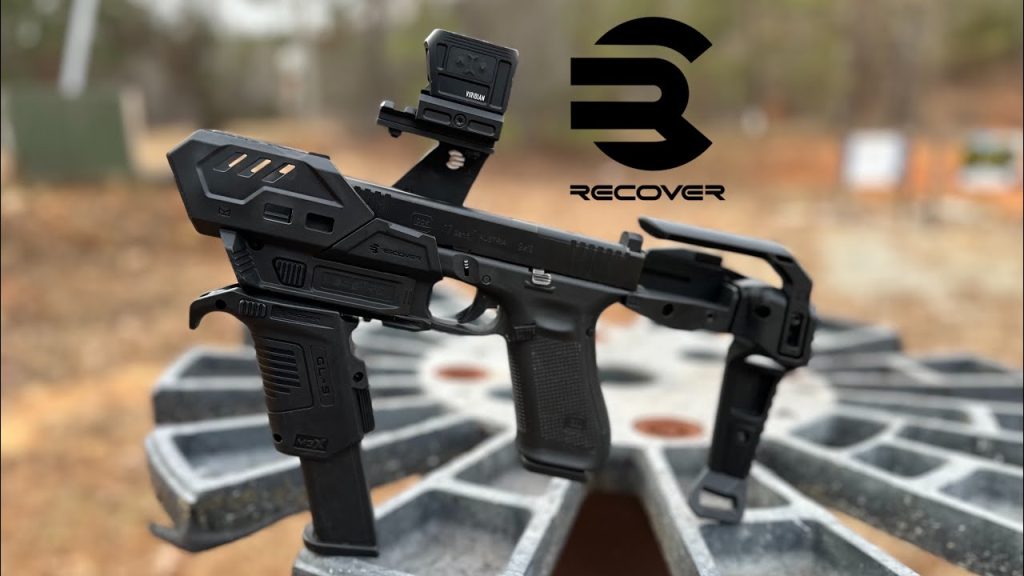
Compact firearm platforms have created a distinct market for accessories focused on portability, storage, equipment organization, and model-specific compatibility. When evaluating glock 43 accessories, buyers benefit from looking beyond product appearance and considering measurable factors such as dimensions, material composition, weight, construction quality, and documented specifications. A statistics-oriented approach makes these characteristics easier to compare while supporting informed decisions. Understanding how individual product features relate to practical requirements also helps establish realistic expectations about quality, usability, and long-term care.
Understanding the Compact Equipment Market
Compact firearm platforms have specific space and dimensional requirements that influence the accessories developed for them. These requirements make accurate product descriptions particularly valuable because small differences in design can affect compatibility.
Market analysis often evaluates products through measurable attributes, including price ranges, weight, material types, customer review volumes, and available product variations. Each metric contributes a different perspective. For example, the number of available configurations can indicate product variety, while published dimensions help clarify the physical characteristics of an item.
These figures should be considered within their proper context. A larger selection does not automatically indicate superior quality, and review volume alone cannot establish product performance. Reliable evaluation combines several indicators rather than relying on a single statistic.
Compatibility as a Core Evaluation Metric
Compatibility deserves particular attention when accessories are intended for a specific firearm model. Products may differ according to model generation, external dimensions, attachment interfaces, and manufacturer-defined requirements.
A useful evaluation begins with the exact model designation and the accessory’s published specifications. Product documentation should identify the configurations supported and explain any relevant limitations.
Dimensional accuracy is especially important in model-specific equipment. Measurements expressed in consistent units allow readers to compare product information more objectively. Manufacturer confirmation remains essential whenever compatibility is uncertain.
This specification-led approach creates a more dependable foundation for product selection and reduces reliance on assumptions based on similar appearances or general category descriptions.
Material Composition and Construction Standards
The materials used in an accessory influence its weight, rigidity, flexibility, surface finish, and maintenance requirements. Different products may incorporate reinforced polymers, engineered metals, molded materials, or durable textiles, depending on their intended function.
Polymer construction can support lightweight designs and complex shapes. Metal components may offer greater rigidity in applications where structural properties are important. Textile products can provide flexible storage and transportation options.
Statistical comparisons become more useful when material information is paired with additional details. Published weight, manufacturing descriptions, finish specifications, and warranty conditions help create a broader picture of the product.
Material names alone are not sufficient evidence of durability. Construction quality and documented manufacturing standards also contribute to an informed assessment.
Portability and Weight Considerations
Portability is a relevant consideration for compact equipment, particularly when accessories are stored or transported regularly. Weight measurements provide a straightforward metric for comparing products designed for similar purposes.
However, the lowest weight is not necessarily the most appropriate choice for every requirement. Buyers should also consider dimensions, material strength, storage capacity, and the intended application.
A balanced assessment compares products within the same category and uses consistent units of measurement. Grams and kilograms, for example, should be converted before comparing published weights.
This basic statistical discipline improves clarity and helps prevent misleading conclusions when reviewing product specifications.
Storage Design and Organizational Features
Storage accessories can help keep equipment organized and provide designated spaces for individual items. Cases, bags, and compartment-based organizers vary in size, internal layout, closure systems, and construction materials.
Several measurable characteristics can guide a comparison:
- Internal dimensions: Clarify the available space for the intended contents.External dimensions: Help determine overall storage and transportation requirements.Empty weight: Provides a baseline for assessing portability.Compartment configuration: Describes how storage space is divided.Material specifications: Explain the construction and care requirements.
- Internal dimensions: Clarify the available space for the intended contents.
- External dimensions: Help determine overall storage and transportation requirements.
- Empty weight: Provides a baseline for assessing portability.
- Compartment configuration: Describes how storage space is divided.
- Material specifications: Explain the construction and care requirements.
These details make product descriptions easier to interpret. Responsible storage should also prioritize secure access control and compliance with applicable transportation and storage laws.
Using Product Data for Better Comparisons
A structured comparison brings together technical information, customer feedback, and clearly stated product terms. Each data point should answer a specific question rather than serve as an isolated indicator of quality.
Customer review counts can show how much published feedback is available, but they do not necessarily represent the experience of every owner. Warranty periods describe stated coverage, subject to the applicable conditions, rather than guaranteeing a particular service life.
Similarly, product photographs help illustrate design features but cannot independently verify measurements or model compatibility. Specifications and manufacturer documentation remain essential sources of technical information.
A consistent comparison framework helps readers distinguish measurable characteristics from subjective descriptions and promotional language.
Maintenance and Product Longevity
Maintenance requirements vary according to the accessory’s construction and intended purpose. Textile products, molded cases, and metal components may require different cleaning and inspection methods.
Following manufacturer-approved care instructions helps preserve materials and finishes. Periodic visual checks can also help identify worn closures, damaged stitching, or visible surface deterioration.
For firearm-related equipment, all inspection and maintenance should follow established safety procedures and the manufacturer’s instructions. Questions about component condition or compatibility are best addressed by a qualified professional.
Conclusion
Selecting suitable Glock 43 accessories becomes more straightforward when product evaluation focuses on measurable characteristics and verified specifications. Compatibility, material composition, weight, dimensions, storage design, and maintenance requirements all contribute to a comprehensive assessment. Statistical thinking helps organize these factors into meaningful comparisons without overstating what individual measurements can prove. By prioritizing accurate documentation, responsible storage, and appropriate product care, buyers can approach the compact-accessory market with greater clarity and confidence.